

You (almost definitely) don't need that much protein
Reading Food Intelligence in an age of wellness influencers


This is an edited transcript from the launch of the Conspirituality Book Club. You can listen to the full episode here.
The NIH has been a wonderful place because it allows scientists to take risks, form unique collaborations, and do studies difficult to conduct elsewhere. I’m proud of what we’ve accomplished and I’m fortunate to have had such wonderful colleagues and scientific collaborators. I hope to someday return to government service and lead a research program that will continue to provide gold-standard science to make Americans healthy.
That’s nutrition scientist Kevin Hall sharing his resignation letter from the National Institutes of Health on April 16, 2025.
Hall is considered one of the top nutrition experts in America. For decades, his work informed health-conscious policies and movements across the country. In fact, many of the nutrition facts that RFK Jr and his MAHA fans like to share can be traced back to Hall’s work.
Then his research found something Kennedy didn’t like, so he suppressed Hall’s work, leading to his resignation.
For the launch episode of Conspirituality Book Club, I’m writing about the recent book Hall co-authored with NY Times Opinion writer, Julia Belluz.
Food Intelligence: The Science of How Food Both Nourishes and Harms Us is one of the most insightful books about food I’ve ever read. The irony is that many of MAHA’s main talking points—tobacco companies engineering food to hook Americans; the problems with ultra-processed foods and food environments; the necessity of exercise accompanying a healthy diet—are all in these pages.
The problem isn’t what Belluz and Hall include. It’s what MAHA leaves out.
Before we turn the pages, a little background about Hall’s run-in with Kennedy.
The study at the center of the dispute was published March 4, 2025 in the journal Cell Metabolism. It’s called “Brain dopamine responses to ultra-processed milkshakes are highly variable and not significantly related to adiposity in humans.” Hall served as lead author. Their research used brain imaging to see whether consuming ultraprocessed milkshakes high in fat and sugar caused reactions in dopamine similar to addictive drugs.
The premise being tested was the “food addiction” hypothesis: the idea that ultra-processed foods high in fat and sugar are addictive because they induce an exaggerated post-ingestive brain dopamine response akin to drugs of abuse. This is something Kennedy and MAHA fans often like to say; you’ve probably heard them claim UPFs are more addictive than cocaine. If that thesis was true, people with obesity should show blunted dopamine responses and reduced dopamine receptor availability, pointing to signs of tolerance from repeated overconsumption.
The team used PET scans on 50 participants, which is the largest study of its kind. And…they found the opposite of what the theory predicted. Milkshake consumption didn’t produce a significant post-ingestive dopamine response, and the highly variable individual responses were not significantly related to BMI or body fat. In fact, the measured responses were substantially smaller than those of many addictive drugs. The authors concluded that the narrative of these foods being as addictive as drugs was not supported by their data, which is simply good science.
Hall even contextualized this by saying it didn’t outright prove ultraprocessed foods aren’t addictive. At the time, he said the research “just suggests that they may not be addictive by the typical mechanism that many drugs are addictive.” He noted there are other possible neurochemical pathways. Plus, Hall ran a 2019 trial that showed ultraprocessed diets cause excess calorie intake and weight gain even when calories and macronutrients are matched, something he discusses in Food Intelligence.
So Hall set out with a thesis in mind and was proven wrong. At least, his hypothesis was not confirmed. Instead of raging against the findings, Hall started thinking about how this changes his research approach moving forward and how he’d have to update his own theory of food. He absorbed the findings; he didn’t deny them.
But then there’s his boss. Hall’s work contradicted a central plank of MAHA messaging. Kennedy has long blamed UPFs for a wide range of health problems and regularly characterized them as addictive. You might be surprised to learn that wasn’t based on a ton of evidence, it was more Kennedy vibing on his hunches.
After the study was published, the NY Times wanted to interview Hall. HHS denied the interview request and contacted the reporter directly to downplay the study results because it contradicted Kennedy’s preconceived narratives about ultra-processed food addiction. Hall said he was blocked from being directly interviewed, calling it censorship of how his research was reported.
This wasn’t Hall’s first run-in with Kennedy: in an earlier incident he was instructed to remove a reference to equity from a draft paper, and so he withdrew his name from it.
Before resigning, Hall wrote a letter to Kennedy and incoming NIH Director Dr. Jay Bhattacharya about this censorship. He also lamented funding freezes that were preventing researchers from getting basic supplies or buying food for study participants, which is pretty important if you’re studying things like food addiction. Neither Kennedy or Bhattacharya responded.
And so Hall accepted early retirement in order to (I wish I was kidding) preserve health insurance for his family. Resigning later in protest would have meant losing that benefit.
Watching Kennedy and Dr Oz set the stage for removing millions of Americans from Medicare last week by imposing work requirements is one of the cruelest ways to deflect from the fact that this administration just wants to take away social services. These moves will only damage American health, not make it better.
Let’s turn to the book.
As a general heuristic, this book shows how much more complicated metabolism is than most people realize—and certainly much more complex than wellness influencers and MAHA fans make it out to be.
So far, I’ve been citing Hall’s work, because it’s important to understand politically and scientifically. Julia Belluz is an equal contributor to this book as a journalist, and also offers up her own body to experimentation to one of my favorite wellness pet peeves: microbiome tests. I’ll get there.
They open the book with metabolism; basically, how our bodies turn food and drink into energy. And they go right after one of nutrition’s biggest myths: the notion that slowing down or speeding up metabolism results in an ability to lose weight, or to keep it off in the short or long run.
They look at this through the lens of The Biggest Loser. Years after they participated in the reality show, most participants gained most, all, or more weight back. It was often treated as a problem with “slowed metabolism.” Hall’s research found something different: it was the pressures of the real-world food environment outside the ranch where the show was filmed that caused it.
This becomes a central thesis throughout the book. This is why, the authors explain, boot camps and basically any form of fad diet never works. People eventually return to their old routines, sometimes unknowingly, and often do not understand the complexity of their food environments.
The best way of measuring metabolism today, it turns out, is by measuring a person’s breath. Last year, I talked to Kevin Klatt, who received his PhD in Molecular Nutrition from Cornell University, about the lack of proper nutrition studies. He told me one reason studying nutrition is so hard is how many variables are involved. You need a proper clinical kitchen, where everything can be measured and not be subjected to contamination. And to do it right, you need to confine participants to the research facilities for weeks or months. A big part of the reason, it turns out, is because the researchers are measuring their breathing, which is the best current way of understanding the biochemical reactions occurring in their bodies.
Respiration isn’t something that only happens in our lungs; it occurs in almost every cell in our body. Remember, calories are units of heat energy. As Belluz and Hall write,
Life self-organizes by harnessing a continuous flow of matter and energy derived from food and breath, and that flow gives off heat.
In order to measure the impact of food on that process, you’re measuring heat, and that’s measured through our breath.

There’s a lot of reductionism in nutrition science, and the concept of “slow metabolism” is one of the myths it perpetuates. They write that most people’s metabolic processes are not slow. Weight gain and loss is a lot more complex, which led them to look into another myth that MAHA has readily embraced: the notion that we need more protein.
Short answer: most humans get plenty of protein. There’s a ton of political, cultural, and individual baggage around protein, specifically the strongman idea that meat equals power.
A lot of the scientific confusion around protein traces back to Justus von Liebeg, a German scientist considered to be one of the founders of the field of organic chemistry. Liebeg wasn’t a crank or grifter; he was a highly respected researcher who advanced the field of chemistry. But like some scientists stretching their knowledge beyond their bounds, he had a lot of theories around protein that were never properly tested or verified but became cultural brainworms.
He’s not unique: Edward Jenner, the man who codified vaccination as a legitimate intervention, was a huge self-promoter. Linus Pauling, the brilliant two-time Nobel Prize winner, fell hard for the myth of megadosing vitamin C. And Liebig not only advocated for excessive protein, he founded Liebig’s Extract of Meat Company because he swore megadosing meat was the best way to stave off illness. He’s effectively the grandaddy of the wellness industry: his meat extract was one of the first processed food products, and it was marketed with all sorts of health claims that he never actually researched. Liebig is basically what leads to The Liver King and his business partner, Carnivore MD, Paul Saladino, creating powdered testicle supplements.

The three major macronutrients, carbs, fats, and protein, are composed of configurations of carbon, hydrogen, and oxygen molecules. Only protein contains nitrogen, however. Early research confirmed the necessity of protein through a cruel experiment: dogs eating food lacking nitrogen became sick and quickly died. That’s how they realized protein is an essential building block of life. Following this research, Liebeg officially launched his Extract of Meat in 1865, which Belluz and Hall write laid the “enduring template for rushing to market with untested nutrition ideas.”
Here’s how the explain it:
Let’s be clear: Liebig’s errors still distort the way many of us think about nutrition, even now. Eating vast quantities of protein is not necessarily useful, or even beneficial, to health. We certainly do not need to derive our protein from meat. Consuming extra protein alone will not build muscle, nor is protein what powers muscles. Contrary to Liebig’s theory, the other two macronutrients, carbohydrates and fat, provide almost all of the energy necessary for both the physical and chemical work of life. So carbs and fat, not protein, are the main fuels for the metabolic reactions we learned about in the last chapter. On an essential protein fact, however, Liebig was correct: Protein is the stuff in food that builds and repairs us, or as he’d apparently put it, ‘the stuff of life itself.’
They cover a lot more about protein and are clear that certain groups of people are lacking in protein and need supplementation. This is categorically different from influencer culture.
They then turn to the other two macros, because they’ve also been implicated in a lot of nutrition myths: namely, carbs bad, fats very very good. The whole keto trend that I fell into about 15 years ago is part of that nonsense; thanks Dave Asprey and your coconut oil ketones.
The authors dove into the literature and discovered something fascinating: people on low-carb and low-fat diets both lost similar amounts of weight. How could that be if one macro was superior to the other? Well, they write,
Carbohydrates and fats are practically interchangeable fuels for the body, and we seem to be incredibly adaptable to using almost any combination.
They don’t write off ketogenic diets. In fact, they show promise for managing type 2 diabetes. Emerging research on low fat diets impact on the body’s innate immune system might unlock new information. These are exciting areas of study, but they have not yet proven anything, and if you’re trying to lose weight all the hype might only lead to more confusion.
Speaking of weight, I’ve often spoken about my 15-year struggle with the eating disorder known as orthorexia. I’ve long pushed back against the notion that being overweight is a moral or individual failing. And the authors of Food Intelligence provide plenty of evidence for this.
First, they note that “the neurobiology of people who have obesity variants is different from that of people without them.” They then spend a lot of pages discussing the food environment. In some ways, you’d think they were rehashing MAHA arguments, until you realize the reference material is from years or decades predating Kennedy and crew. I remember reading about how tobacco companies purchased food conglomerates and reengineered food products to be more appealing to consumers some 20 years ago. This information has been out there for some time. MAHA is right to call it out, but they’re wrong to put the onus of the problems on individuals.
Let me unpack that. They’re wrong to pretend that individuals can hack their biology and simply lose weight. Kennedy’s tenure is proving even more dangerous to our health than his predecessors. He’s gutting agencies actually studying chronic diseases. He fired many people researching these problems. Along with Brooke Rollins at the USDA, he’s kicking millions of people off SNAP benefits for supposed fraud, and will soon be kicking thousands of stores off the SNAP benefits list if they don’t spend millions of dollars to change their food offerings.
Does he address the root cause? In this case, that it’s the supply chain and infrastructure that needs to be updated in order for those stores to stock healthier foods? No at all.
Just like his unwillingness to acknowledge that infectious disease can lead to chronic disease and therefore vaccination is a good thing if you want to fight chronic disease, he’s looking way downstream of the actual problem. As the authors write,
nonnutritional features of the food environment may be the most important drivers of overeating in the real world.
They devote chapters looking at how the social determinants of health are affected by our food systems. I’ll leave those for you to read, because as much as I’m trying to unpack here, I really hope this episode inspires you to actually read their work.
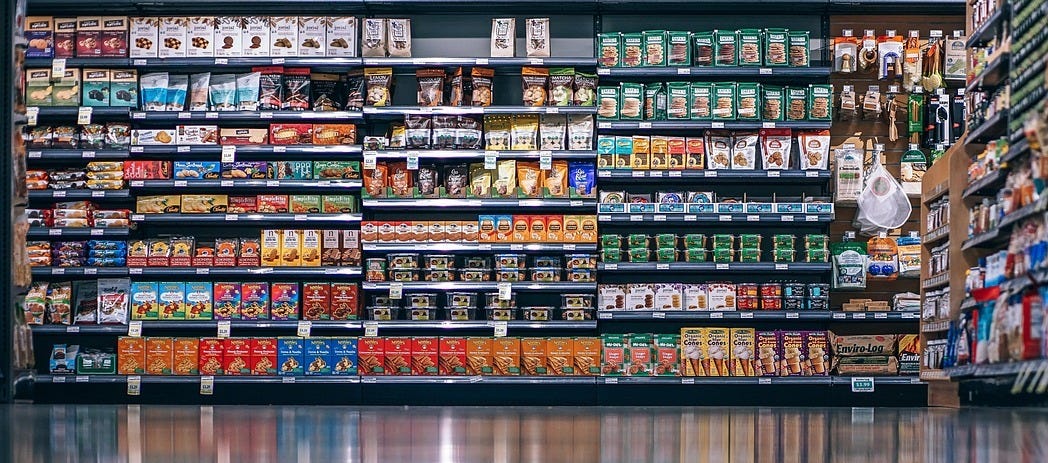
Are UPFs are the real villains?
It’s not that simple, and Hall’s research is why the man is no longer at the NIH.
Hall researched a topic that I always had an issue with: the notion that a calorie is a calorie. Turns out, both his and my hunch were wrong. Calories are, basically, calories, regardless of the macronutrient profile.
One of the real issues, however, is that in order to make UPFs shelf stable, manufacturers remove all the water from them, making them much more calorie-dense. That’s why people tend to gain weight when eating mostly UPFs: they’re taking in a ton more calories and not feeling sated.
Yes, there’s also combinations that make them more appealing, which Hall recognizes. As addictive as cocaine? That’s hyperbole and not reflective of the pathways these chemicals take. That doesn’t mean people don’t come to crave them or, as the authors note, can only afford them. As they write,
if UPFs are anything, they are highly accessible, heavily marketed, and socially acceptable.
It’s the combination of energy density and hyperpalatibility that make them so dangerous.
Calorie absorption, our body’s ability to digest and absorb calories, also plays a role. This is where fiber comes in. Most Americans don’t achieve the RDA for fiber, and that too is a problem. Regardless, they rewrite the maxim “a calorie is a calorie” to better reflect what we know: a calorie is an absorbed calorie. And while our agricultural system produces more than enough calories for everyone, it does not produce enough fruits and vegetables for everyone. That’s the systemic problem MAHA should actually be addressing and incentivizing.
Instead, Kennedy wants everyone to rock a health wearable. I’m not against them. I just know they’re not replacements for actual healthcare, and I don’t spend my money on expensive subscriptions for biomarkers that will likely only cause more health anxiety than fix problems. That’s for me; if you find value in them and they’re helpful, great.
Belluz and Hall spend a number of pages unpacking the unreliability and positive uses of continuous glucose monitors. They also take the overhyped supplements market to task. They provide receipts, like the fact that supplements result in 23,000 emergency room visits and 2,000 hospitalizations every year, and the fact that nutrients derived from whole foods has a lot of great evidence for health behind it, yet not so much for supplements.
Back to microbiome testing. Belluz sent off samples of her spit and shit Zoe and Viome, two subscription companies that purport to give you precision nutrition readings of your inners. I actually laughed out loud when the companies returned opposite readings of her samples (and yes, she sent them samples from the same batch). Whatever nutrition advice made sense was no different from what any credible doctor has been saying for decades: reduce glucose levels, eat whole foods.
When it comes to “personalized,” the conflicting results only created more confusion. Since their products are not FDA-approved, they have to caveat everything the same way supplements companies do: here’s some medical-sounding advice, but it’s not really medical advice, wink wink. As they write,
They purport to be cutting-edge, ahead of the mainstream medical curve—but they also defer to doctors and their traditional diagnostics when medical needs arise.
There’s a lot to pull on in Food Intelligence. I marked the hell out of this book. They offer prescriptions, like subsidizing grocery stores that offer fresh foods, not threatening to shut them down if they don’t. They advocate for a lot more research in nutrition health on a governmental level, not, as Kennedy is doing, forcing medical schools to do it. And perhaps most importantly, they remind us to follow the science. There are a number of instances where Hall went into a study expecting one result and getting the opposite. Instead of throwing out the data, he absorbed it and updated his own thoughts on the topic, letting the work guide the way.
If only we could be so lucky and have people in charge of public health in America who would do the same.
The NIH has been a wonderful place because it allows scientists to take risks, form unique collaborations, and do studies difficult to conduct elsewhere. I’m proud of what we’ve accomplished and I’m fortunate to have had such wonderful colleagues and scientific collaborators. I hope to someday return to government service and lead a research program that will continue to provide gold-standard science to make Americans healthy.
That’s nutrition scientist Kevin Hall sharing his resignation letter from the National Institutes of Health on April 16, 2025.
Hall is considered one of the top nutrition experts in America. For decades, his work informed health-conscious policies and movements across the country. In fact, many of the nutrition facts that RFK Jr and his MAHA fans like to share can be traced back to Hall’s work.
Then his research found something Kennedy didn’t like, so he suppressed Hall’s work, leading to his resignation.
For the launch episode of Conspirituality Book Club, I’m writing about the recent book Hall co-authored with NY Times Opinion writer, Julia Belluz.
Food Intelligence: The Science of How Food Both Nourishes and Harms Us is one of the most insightful books about food I’ve ever read. The irony is that many of MAHA’s main talking points—tobacco companies engineering food to hook Americans; the problems with ultra-processed foods and food environments; the necessity of exercise accompanying a healthy diet—are all in these pages.
The problem isn’t what Belluz and Hall include. It’s what MAHA leaves out.
Before we turn the pages, a little background about Hall’s run-in with Kennedy.
The study at the center of the dispute was published March 4, 2025 in the journal Cell Metabolism. It’s called “Brain dopamine responses to ultra-processed milkshakes are highly variable and not significantly related to adiposity in humans.” Hall served as lead author. Their research used brain imaging to see whether consuming ultraprocessed milkshakes high in fat and sugar caused reactions in dopamine similar to addictive drugs.
The premise being tested was the “food addiction” hypothesis: the idea that ultra-processed foods high in fat and sugar are addictive because they induce an exaggerated post-ingestive brain dopamine response akin to drugs of abuse. This is something Kennedy and MAHA fans often like to say; you’ve probably heard them claim UPFs are more addictive than cocaine. If that thesis was true, people with obesity should show blunted dopamine responses and reduced dopamine receptor availability, pointing to signs of tolerance from repeated overconsumption.
The team used PET scans on 50 participants, which is the largest study of its kind. And…they found the opposite of what the theory predicted. Milkshake consumption didn’t produce a significant post-ingestive dopamine response, and the highly variable individual responses were not significantly related to BMI or body fat. In fact, the measured responses were substantially smaller than those of many addictive drugs. The authors concluded that the narrative of these foods being as addictive as drugs was not supported by their data, which is simply good science.
Hall even contextualized this by saying it didn’t outright prove ultraprocessed foods aren’t addictive. At the time, he said the research “just suggests that they may not be addictive by the typical mechanism that many drugs are addictive.” He noted there are other possible neurochemical pathways. Plus, Hall ran a 2019 trial that showed ultraprocessed diets cause excess calorie intake and weight gain even when calories and macronutrients are matched, something he discusses in Food Intelligence.
So Hall set out with a thesis in mind and was proven wrong. At least, his hypothesis was not confirmed. Instead of raging against the findings, Hall started thinking about how this changes his research approach moving forward and how he’d have to update his own theory of food. He absorbed the findings; he didn’t deny them.
But then there’s his boss. Hall’s work contradicted a central plank of MAHA messaging. Kennedy has long blamed UPFs for a wide range of health problems and regularly characterized them as addictive. You might be surprised to learn that wasn’t based on a ton of evidence, it was more Kennedy vibing on his hunches.
After the study was published, the NY Times wanted to interview Hall. HHS denied the interview request and contacted the reporter directly to downplay the study results because it contradicted Kennedy’s preconceived narratives about ultra-processed food addiction. Hall said he was blocked from being directly interviewed, calling it censorship of how his research was reported.
This wasn’t Hall’s first run-in with Kennedy: in an earlier incident he was instructed to remove a reference to equity from a draft paper, and so he withdrew his name from it.
Before resigning, Hall wrote a letter to Kennedy and incoming NIH Director Dr. Jay Bhattacharya about this censorship. He also lamented funding freezes that were preventing researchers from getting basic supplies or buying food for study participants, which is pretty important if you’re studying things like food addiction. Neither Kennedy or Bhattacharya responded.
And so Hall accepted early retirement in order to (I wish I was kidding) preserve health insurance for his family. Resigning later in protest would have meant losing that benefit.
Watching Kennedy and Dr Oz set the stage for removing millions of Americans from Medicare last week by imposing work requirements is one of the cruelest ways to deflect from the fact that this administration just wants to take away social services. These moves will only damage American health, not make it better.
Let’s turn to the book.
As a general heuristic, this book shows how much more complicated metabolism is than most people realize—and certainly much more complex than wellness influencers and MAHA fans make it out to be.
So far, I’ve been citing Hall’s work, because it’s important to understand politically and scientifically. Julia Belluz is an equal contributor to this book as a journalist, and also offers up her own body to experimentation to one of my favorite wellness pet peeves: microbiome tests. I’ll get there.
They open the book with metabolism; basically, how our bodies turn food and drink into energy. And they go right after one of nutrition’s biggest myths: the notion that slowing down or speeding up metabolism results in an ability to lose weight, or to keep it off in the short or long run.
They look at this through the lens of The Biggest Loser. Years after they participated in the reality show, most participants gained most, all, or more weight back. It was often treated as a problem with “slowed metabolism.” Hall’s research found something different: it was the pressures of the real-world food environment outside the ranch where the show was filmed that caused it.
This becomes a central thesis throughout the book. This is why, the authors explain, boot camps and basically any form of fad diet never works. People eventually return to their old routines, sometimes unknowingly, and often do not understand the complexity of their food environments.
The best way of measuring metabolism today, it turns out, is by measuring a person’s breath. Last year, I talked to Kevin Klatt, who received his PhD in Molecular Nutrition from Cornell University, about the lack of proper nutrition studies. He told me one reason studying nutrition is so hard is how many variables are involved. You need a proper clinical kitchen, where everything can be measured and not be subjected to contamination. And to do it right, you need to confine participants to the research facilities for weeks or months. A big part of the reason, it turns out, is because the researchers are measuring their breathing, which is the best current way of understanding the biochemical reactions occurring in their bodies.
Respiration isn’t something that only happens in our lungs; it occurs in almost every cell in our body. Remember, calories are units of heat energy. As Belluz and Hall write,
Life self-organizes by harnessing a continuous flow of matter and energy derived from food and breath, and that flow gives off heat.
In order to measure the impact of food on that process, you’re measuring heat, and that’s measured through our breath.
There’s a lot of reductionism in nutrition science, and the concept of “slow metabolism” is one of the myths it perpetuates. They write that most people’s metabolic processes are not slow. Weight gain and loss is a lot more complex, which led them to look into another myth that MAHA has readily embraced: the notion that we need more protein.
Short answer: most humans get plenty of protein. There’s a ton of political, cultural, and individual baggage around protein, specifically the strongman idea that meat equals power.
A lot of the scientific confusion around protein traces back to Justus von Liebeg, a German scientist considered to be one of the founders of the field of organic chemistry. Liebeg wasn’t a crank or grifter; he was a highly respected researcher who advanced the field of chemistry. But like some scientists stretching their knowledge beyond their bounds, he had a lot of theories around protein that were never properly tested or verified but became cultural brainworms.
He’s not unique: Edward Jenner, the man who codified vaccination as a legitimate intervention, was a huge self-promoter. Linus Pauling, the brilliant two-time Nobel Prize winner, fell hard for the myth of megadosing vitamin C. And Liebig not only advocated for excessive protein, he founded Liebig’s Extract of Meat Company because he swore megadosing meat was the best way to stave off illness. He’s effectively the grandaddy of the wellness industry: his meat extract was one of the first processed food products, and it was marketed with all sorts of health claims that he never actually researched. Liebig is basically what leads to The Liver King and his business partner, Carnivore MD, Paul Saladino, creating powdered testicle supplements.
The three major macronutrients, carbs, fats, and protein, are composed of configurations of carbon, hydrogen, and oxygen molecules. Only protein contains nitrogen, however. Early research confirmed the necessity of protein through a cruel experiment: dogs eating food lacking nitrogen became sick and quickly died. That’s how they realized protein is an essential building block of life. Following this research, Liebeg officially launched his Extract of Meat in 1865, which Belluz and Hall write laid the “enduring template for rushing to market with untested nutrition ideas.”
Here’s how the explain it:
Let’s be clear: Liebig’s errors still distort the way many of us think about nutrition, even now. Eating vast quantities of protein is not necessarily useful, or even beneficial, to health. We certainly do not need to derive our protein from meat. Consuming extra protein alone will not build muscle, nor is protein what powers muscles. Contrary to Liebig’s theory, the other two macronutrients, carbohydrates and fat, provide almost all of the energy necessary for both the physical and chemical work of life. So carbs and fat, not protein, are the main fuels for the metabolic reactions we learned about in the last chapter. On an essential protein fact, however, Liebig was correct: Protein is the stuff in food that builds and repairs us, or as he’d apparently put it, ‘the stuff of life itself.’
They cover a lot more about protein and are clear that certain groups of people are lacking in protein and need supplementation. This is categorically different from influencer culture.
They then turn to the other two macros, because they’ve also been implicated in a lot of nutrition myths: namely, carbs bad, fats very very good. The whole keto trend that I fell into about 15 years ago is part of that nonsense; thanks Dave Asprey and your coconut oil ketones.
The authors dove into the literature and discovered something fascinating: people on low-carb and low-fat diets both lost similar amounts of weight. How could that be if one macro was superior to the other? Well, they write,
Carbohydrates and fats are practically interchangeable fuels for the body, and we seem to be incredibly adaptable to using almost any combination.
They don’t write off ketogenic diets. In fact, they show promise for managing type 2 diabetes. Emerging research on low fat diets impact on the body’s innate immune system might unlock new information. These are exciting areas of study, but they have not yet proven anything, and if you’re trying to lose weight all the hype might only lead to more confusion.
Speaking of weight, I’ve often spoken about my 15-year struggle with the eating disorder known as orthorexia. I’ve long pushed back against the notion that being overweight is a moral or individual failing. And the authors of Food Intelligence provide plenty of evidence for this.
First, they note that “the neurobiology of people who have obesity variants is different from that of people without them.” They then spend a lot of pages discussing the food environment. In some ways, you’d think they were rehashing MAHA arguments, until you realize the reference material is from years or decades predating Kennedy and crew. I remember reading about how tobacco companies purchased food conglomerates and reengineered food products to be more appealing to consumers some 20 years ago. This information has been out there for some time. MAHA is right to call it out, but they’re wrong to put the onus of the problems on individuals.
Let me unpack that. They’re wrong to pretend that individuals can hack their biology and simply lose weight. Kennedy’s tenure is proving even more dangerous to our health than his predecessors. He’s gutting agencies actually studying chronic diseases. He fired many people researching these problems. Along with Brooke Rollins at the USDA, he’s kicking millions of people off SNAP benefits for supposed fraud, and will soon be kicking thousands of stores off the SNAP benefits list if they don’t spend millions of dollars to change their food offerings.
Does he address the root cause? In this case, that it’s the supply chain and infrastructure that needs to be updated in order for those stores to stock healthier foods? No at all.
Just like his unwillingness to acknowledge that infectious disease can lead to chronic disease and therefore vaccination is a good thing if you want to fight chronic disease, he’s looking way downstream of the actual problem. As the authors write,
nonnutritional features of the food environment may be the most important drivers of overeating in the real world.
They devote chapters looking at how the social determinants of health are affected by our food systems. I’ll leave those for you to read, because as much as I’m trying to unpack here, I really hope this episode inspires you to actually read their work.
Are UPFs are the real villains?
It’s not that simple, and Hall’s research is why the man is no longer at the NIH.
Hall researched a topic that I always had an issue with: the notion that a calorie is a calorie. Turns out, both his and my hunch were wrong. Calories are, basically, calories, regardless of the macronutrient profile.
One of the real issues, however, is that in order to make UPFs shelf stable, manufacturers remove all the water from them, making them much more calorie-dense. That’s why people tend to gain weight when eating mostly UPFs: they’re taking in a ton more calories and not feeling sated.
Yes, there’s also combinations that make them more appealing, which Hall recognizes. As addictive as cocaine? That’s hyperbole and not reflective of the pathways these chemicals take. That doesn’t mean people don’t come to crave them or, as the authors note, can only afford them. As they write,
if UPFs are anything, they are highly accessible, heavily marketed, and socially acceptable.
It’s the combination of energy density and hyperpalatibility that make them so dangerous.
Calorie absorption, our body’s ability to digest and absorb calories, also plays a role. This is where fiber comes in. Most Americans don’t achieve the RDA for fiber, and that too is a problem. Regardless, they rewrite the maxim “a calorie is a calorie” to better reflect what we know: a calorie is an absorbed calorie. And while our agricultural system produces more than enough calories for everyone, it does not produce enough fruits and vegetables for everyone. That’s the systemic problem MAHA should actually be addressing and incentivizing.
Instead, Kennedy wants everyone to rock a health wearable. I’m not against them. I just know they’re not replacements for actual healthcare, and I don’t spend my money on expensive subscriptions for biomarkers that will likely only cause more health anxiety than fix problems. That’s for me; if you find value in them and they’re helpful, great.
Belluz and Hall spend a number of pages unpacking the unreliability and positive uses of continuous glucose monitors. They also take the overhyped supplements market to task. They provide receipts, like the fact that supplements result in 23,000 emergency room visits and 2,000 hospitalizations every year, and the fact that nutrients derived from whole foods has a lot of great evidence for health behind it, yet not so much for supplements.
Back to microbiome testing. Belluz sent off samples of her spit and shit Zoe and Viome, two subscription companies that purport to give you precision nutrition readings of your inners. I actually laughed out loud when the companies returned opposite readings of her samples (and yes, she sent them samples from the same batch). Whatever nutrition advice made sense was no different from what any credible doctor has been saying for decades: reduce glucose levels, eat whole foods.
When it comes to “personalized,” the conflicting results only created more confusion. Since their products are not FDA-approved, they have to caveat everything the same way supplements companies do: here’s some medical-sounding advice, but it’s not really medical advice, wink wink. As they write,
They purport to be cutting-edge, ahead of the mainstream medical curve—but they also defer to doctors and their traditional diagnostics when medical needs arise.
There’s a lot to pull on in Food Intelligence. I marked the hell out of this book. They offer prescriptions, like subsidizing grocery stores that offer fresh foods, not threatening to shut them down if they don’t. They advocate for a lot more research in nutrition health on a governmental level, not, as Kennedy is doing, forcing medical schools to do it. And perhaps most importantly, they remind us to follow the science. There are a number of instances where Hall went into a study expecting one result and getting the opposite. Instead of throwing out the data, he absorbed it and updated his own thoughts on the topic, letting the work guide the way.
If only we could be so lucky and have people in charge of public health in America who would do the same.